
Dear Family in the Messiah Yeshua! Greetings and blessings to you from your brothers and sisters at “Holy Land Ministries”, Israel!
We are again in the first month of the Jewish Calendar, the month of Nisan, getting ready to celebrate Pesach (Passover ). The event of Pesach , is not only a central historic event for the nation of Israel, but it is also the essential part of the plan of redemption for the whole world.
As we are entering into the Passover season, remembering the slavery of Egypt and all the dramatic events accompanying it, we are given a unique opportunity to focus and meditate on our personal Exodus, on our freedom from the bondage of sin, given to each us by the sacrifice and love of our King and Redeemer Messiah Yeshua.
It is a special time of the year appointed by our Father as His Holy day for our remembrance and observance, which has a great blessing and significance in it. Keeping and enjoying this great Holy day gives to all of us a wonderful opportunity of coming closer to the Father, bringing with it the inner cleansing and renewal of our souls, and opens new capacities and strength for the whole year…
This year the beginning of Pesach Festival is on the 14th day of the Jewish month Nisan, which starts on the sunset of Shabbat on the 27th of March and ends at nightfall Sunday, April the 4th by the Gregorian calendar.
As usual, at the beginning of our letter, we would like to share with you a Passover teaching from our friend and Israeli rabbi, our dear brother in the Messiah Yeshua:
בס״ד
It Is Finished!
It is most frequent in the four Gospel accounts that, after Messiah Yeshua completes some particular action, for the author to state, “ this was done in order that it might fulfill what is written in the Scriptures .” Yeshua was sent into this world, having been clothed with flesh and blood, in order to fulfill His Father’s will. This calling contained many different aspects, but primarily He was called to give His life as the only means for eternal redemption. It is very important for one to understand that the concept of redemption is a dominant theme throughout the Bible and this concept relates in an unique manner to the Passover. It is common when examining rabbinical writings for one to learn that Passover is called the Festival of Redemption.
When studying the Scriptures, one finds a connection between Passover and death.
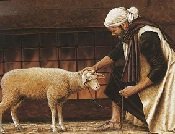
In the Torah, each family (house) had a choice, either slaughter (kill) the Passover lamb or experience the slaying (death) of the firstborn (both man and beast).

In other words, every household at Passover would experience death.
It is with this knowledge, that one can properly understand why the Gospels stated,
“ From then, Yeshua began to show to His disciples that it was necessary for him to go to Jerusalem and many (things) to suffer from the elders, chief priests, and scribes; and to be put to death and for the sake of the third day, be raised .” Matthew 16:21
Paul stated the following to the Corinthians because Yeshua is the true Passover Lamb,
“… and for our Passover on behalf of us was slaughtered (the) Messiah .” 1 Corinthians 5:7
Unfortunately, today many people are too casual and fail to pay close attention to how carefully Yeshua behaved to fulfill the Scriptures. This is certainly the case in regard to His death on the tree (cross). Prior to the Roman soldiers nailing His hands and ankles, Yeshua was offered a drink of sour wine mixed with gall πιεῖν οἶνον μετὰ χολῆς μεμιγμένον . The purpose of this drink was to sedate Him for a moment while they pounded the large nails through His flesh. At this time, Yeshua refused to drink. However, while on the cross a very different event occurred.
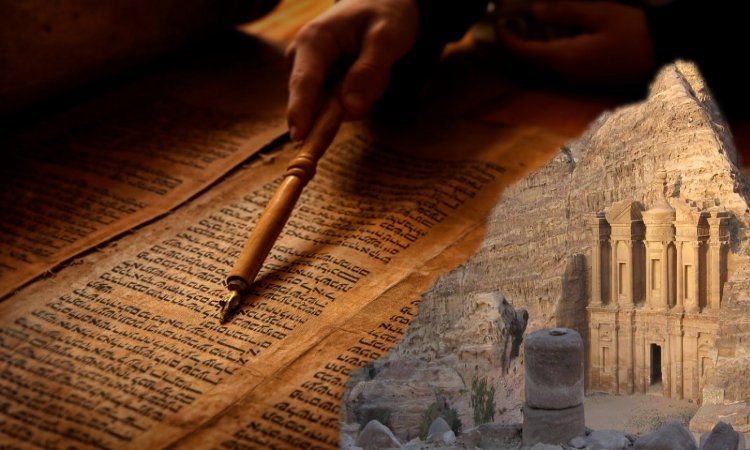
In John’s Gospel, the reader is told something which is most significant and provides much information concerning Yeshua’s thoughts while on the cross and approaching His death. The text is as follows, Μετὰ τοῦτο εἰδὼς ὁ Ἰησοῦς ὅτι ἤδη πάντατετέλεσται, ἵνα τελειωθῇ ἡ γραφή, λέγει, Διψῶ.
“ After this, Yeshua knowing that now all things were accomplished (fulfilled), in order that the Scripture should be accomplished (fulfilled) , says ‘I thirst’”. John 19:28
There are a few interesting aspects concerning this verse. The verb “knowing” is in the perfect tense. This grammatical condition reveals something that began in the past, is still happening at the present time, and will continue into the future. The use of the perfect tense informs the reader that Yeshua had known what needed to be accomplished and at this very moment suffering upon the cross, He was thinking about these things and that these things had a future relevance. The word ἤδη can mean “already” or “now”. There is a word that appears twice in this verse, τετέλεσται and τελειωθῇ . This word conveys something that is “over”, “finished” “accomplished” or “fulfilled”. In other words, something which has reached its end or conclusion.
Normally, when one glances at this verse, it seems to say that Yeshua has already accomplished everything for which He was primarily sent into the world to do in regard to His First Coming. But upon reading the next few verses, one learns that there was indeed something else that needed to be fulfilled. For those who understand the Greek text, this fact could be expected from the use of the perfect tense also for the word τετέλεσται “ were accomplished (fulfilled) ”. The perfect informs the reader that all things being accomplished is a process which does have a connection with the future. The appearance of the word ἤδη , best translated within this context as “ now ”, hints that at this time Yeshua was going to bring a completion or an end to the primary work for which He descended from the heavens.
The second appearance of the word previously discussed is found in regard to the Scripture being accomplished or fulfilled. In this occurrence, the verb is in the passive voice, which reveals that something or someone must cause the Scripture to be accomplished. This is what Yeshua is about ready to do; for at the end of the verse Yeshua states, Διψῶ “ I thirst !”
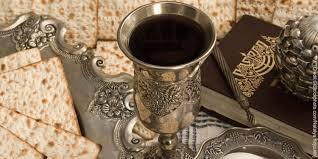
Although there is no doubt that Yeshua would have been thirsty from a physical standpoint, His statement was not in regard to a physical need, but a strong desire to see every aspect fulfilled concerning the Passover. Biblically speaking ( ,(דאורייתא there are three elements which must be consumed during the Passover meal. They are Unleavened Bread, Bitter herbs, and the Passover offering (the lamb). Yeshua is the Unleavened Bread as He was without sin and called the Bread of Life (John 6:35) and of course our Passover Lamb. However, there is nothing in the Bible that would suggest that Yeshua is related to that which is bitter.
In the book of Numbers chapter 9 and verse 11, it is stated,
בַּחֹדֶשׁ הַשֵּׁנִי בְּאַרְבָּעָה עָשָׂר יוֹם, בֵּין הָעַרְבַּיִם–יַעֲשׂוּ אֹתוֹ: עַל-מַצּוֹת וּמְרֹרִים, יֹאכְלֻהוּ:
“ In the second month, on the fourteenth day, at twilight, they will do it (the Passover sacrifice) , with unleavened bread and bitters, they will eat it .”
The purpose of this verse is to reveal that it was a Biblical requirement for one to partake of these three elements together, the lamb, the unleavened bread, and the bitters. Although this specific verse deals with a commandment which is in regard to the second Passover (the Passover for those who could not keep the Passover in the first month), it was equally binding upon those who observed the Passover at its proper time in the first month.
After Yeshua cried out, “ I thirst ” the next verse reveals that there was a vessel full of ὄξος bitter wine.
This was a type of wine mixed with bitter herbs which was given to Yeshua via a hyssop branch. It is a very important detail which John provides the readers when he includes the fact that a hyssop branch was used; as hyssop was also used in the Passover in Egypt,
וּלְקַחְתֶּם אֲגֻדַּת אֵזוֹב, וּטְבַלְתֶּם בַּדָּם אֲשֶׁר-בַּסַּף, וְהִגַּעְתֶּם אֶל-הַמַּשְׁקוֹף וְאֶל-שְׁתֵּיהַמְּזוּזֹת מִן-הַדָּם אֲשֶׁר בַּסָּף; וְאַתֶּם, לֹא תֵצְאוּ אִישׁ מִפֶּתַח-בֵּיתוֹ–עַד-בֹּקֶר
“ And you will take a bunch of hyssop and you will dip in blood which is in a basin and you will apply it to the lintel and the two doorposts from the blood which is in the basin and you will not go forth, a man from the door of his house, until morning .” Exodus 12:22


After Yeshua received the bitter wine, He said, “ It is finished ” and gave up His spirit (died). The word translated “ It is finished ” is Τετέλεσται and it is the third time that this word appears in John 19:28-30. It is the same which was previously mentioned when studying verse 28 where stated,
This word conveys something that is ‘over’, ‘finished’ ‘accomplished’ or ‘fulfilled’. In other words, something which has reached its end or conclusion.”
Therefore, when Yeshua stated, “ It is finished ”, He was revealing that everything for which He had been sent the first time into this world by His heavenly Father was accomplished or had been fulfilled. Once again, this verse, as with its first occurrence in verse 28, is in the perfect tense. This reveals that what Yeshua had fulfilled was a series of events which will have ongoing and future implications. The passive voice is used to convey that it was indeed Yeshua Who had accomplished the will of G-d. There is one more aspect of the word τελέω which must be pointed out. Not only does this word convey something that is ‘over’, ‘finished’ ‘accomplished’ or ‘fulfilled’–in other words, something which has reached its end or conclusion–but it also reflects something which has been accomplished in a manner which achieves it perfectly . Hence, when Yeshua stated “ It is finished ”, one should properly understand that what Yeshua accomplished upon the cross was done perfectly and it completely fulfills the purposes of G-d. Because all of this was accomplished upon Passover, one should rightly conclude that what Yeshua had perfectly accomplished was the work of eternal redemption which one can freely receive by accepting Him as one’s Passover offering that redeems perfectly and completely for all of his or her sins.
Dear Friends, please continue to pray for the discipleship course which our Israeli rabbi is teaching to the new believers today. As we shared with you in our previous correspondence, we see this training in Israel, as our highest priority, that is able to provide us with an effective tool for evangelism.
“Take heed to yourself and to the doctrine. Continue in them, for in doing this you will save both yourself and those who hear you”. 1 Timothy 4:16 (NKJV).
Beside the great personal importance of this teaching for each of us individually, the advancement of our testimony in Israel today, as Yeshua’s disciples is largely dependent on understanding Messiah’s role and mission in the context of ancient Jewish thinking and expectations concerning Him. Lack of such knowledge and understanding doom the efforts of many sincere ardent evangelists to failure. And thus often the endeavors of many foreign missionaries in Israel are seen more as an expression and promotion of a different religious culture, perhaps very noble at best, but still alien and strange to the ancient Jewish concepts of the local religious community.
This is why it is very essential for us to see Yeshua’s ministry within His own culture and realize His fulfillment of G-d’s specific promises to Israel as well as His being a Blessed Savior to the entire world which was promised to our father Abraham “…and in you all the families of the earth shall be blessed”. Genesis 3:12 (b).
As we began this local teaching sessions for the young believers with our rabbi we have realized that such training might be a useful evangelism tool for experienced ministers, coming from different religious cultures and seeking to reach Israelis with the Gospel message of the Messiah Yeshua.
That is why we are welcoming and encouraging everybody who wishes to join us in this course.
Dear Family, please pray with us that the L-rd will bless and strengthen us in this new beginning, using it for His glory and purposes. May this training continue and bring much fruit, pleasing to our King and Messiah, advancing His light and preparing many hearts in Israel for welcoming and receiving the reality of His Glorious Coming Kingdom.


Please continue to pray for our ministry to the poor and needy, as this type of ministry the Lord has explicitly approved in His word.
“Pure and undefiled religion before G-d and the Father is this: to visit orphans and widows in their trouble, and to keep oneself unspotted from the world”. James 1:27 (NKJV).
Besides, this type of ministry in Israel is always a great testimony to both groups of modern Israelis: to the secular people and to the religious communities within Israeli society today.
For many years we have been serving the poor people in Israel, though only for the last few years have we began home visits which allows us to personally deliver food packages and prepared hot meals to the poorest and neediest among Israeli society.
Visiting these dear people in their tiny flats is providing our local team with a unique opportunity to pray with them and for them about their various challenges they are facing in life and encourage them to focus on their Faith in Messiah and on the reality of His coming Kingdom.
“Listen, my beloved brethren: Has G-d not chosen the poor of this world to be rich in faith and heirs of the kingdom which He promised to those who love Him?” James 2:5 (NKJV).
As we have shared earlier in our previous letters, we are also specifically seeking to minister to the elderly Israelis, as they are perhaps the neediest among the poor whom we serve. Besides the usual challenges in life such as financial need and sickness, which of course is more common in this age category, these precious people are usually very lonely and really need all the encouragement and love that we can provide for them by the grace and strength of our Messiah.
Even those of them who have been believers throughout their life are feeling frightened and insecure at times as they’re entering this last stage and final stage of their earthly journey.
Thus we also see our ministry in …strengthening the souls of the disciples, exhorting them to continue in the faith, and saying, “We must through many tribulations enter the kingdom of God.” ‘ Acts 14:22 (NKJV).
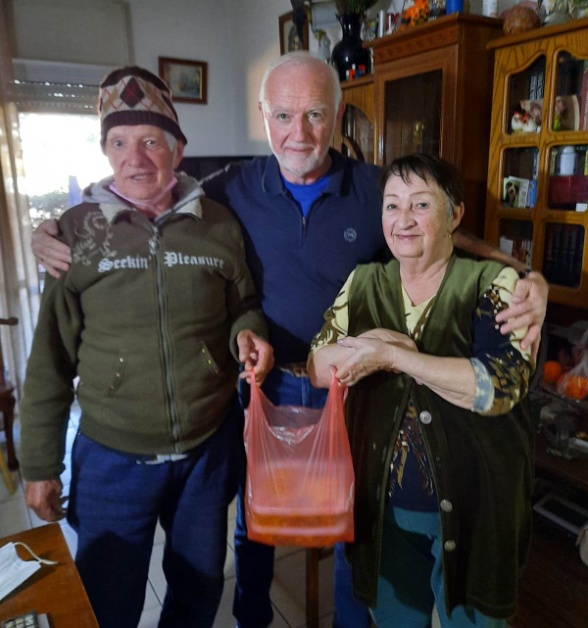

Please pray that the Lord will bless our ministry to these dear elderly people , and enable us to strengthen their souls, showing them the love and tenderness of our Messiah during this difficult stage of their lives.
————————————————————————————————
Dear Friends, at the end of this letter we are asking your prayers for the new project that we are calling “Tabitah”.
This will be an online store that we are planning to open officially by this Shavuot, which falls on the 16th of May this year by the Gregorian calendar.
Why have we called it “Tabitah”? The inspiration came from the story recorded in the Book of Acts chapter 9 : 36-42, describing the events which happened with a Jewish disciple of Yeshua by the name of Tabitah (Tabitha in English, but we use the Aramaic version of her name which is “Tabitah”). Tabitah lived during the times of the Apostles. At some stage of her life she became sick and died, but then she was resurrected by Peter as a living testimony of Yeshua’s Gospel teaching then being spread in Tabitah’s area of Israel (which lies in the area of modern South Tel Aviv, Jaffo).
She was known for her good works and acts of charity. She was a caring person who sewed for others and gave to the needy. She most likely was a widow.
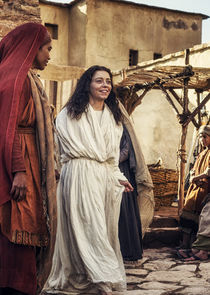
Tabitah is explicitly called in the Biblical text a “disciple”, so we can draw from it, that Tabitah was passionate and committed follower of her Messiah, and belonged to the inner circle of the early believing community.
The feminine form of the word disciple in Greek is used only once in the New Testament, and seldom elsewhere. It is used here to identify Tabitah. Tabitah is also described as a fruitful artist in her field, also known for her kindness and generosity. It is recorded in Acts 9:39 that Tabitah’s friends were eager to demonstrate to Peter the clothing she had created, the beautiful and useful items, brightening the lives of the receivers.

The testimony of Tabitah has been a practical and artistic inspiration for our girls , who are seeking to follow her example in working with their hands and thus blessing their friends and poor with the products of their love and labor.
We have been working on the development of the Tabitah project for a while already, but only recently have we reached the stage at which we are beginning to see some fruit for our efforts.
We are making different art and craft items.
We are creating them here with our hands, such as jewelry, bags, clothing, including traditional Jewish clothing from the Biblical times, as well, as modern Jewish religious outfits and more…
We believe that the establishment of Tabitah’s store will allow us to contribute financially to the charity projects of our ministry. Though all our ministry to the poor and needy in Israel has for many years been generously and faithfully sponsored by our family in the Messiah outside of Israel, we see this as a great privilege and joy to be able also to contribute our part to this cause.


As we already explained it is a wonderful opportunity to bless the local poor and because of this, we are not always selling the items we make.

For instance, a poor girl needs a bridal dress for her wedding (it is very expensive in Israel and often it is hard for her family to afford it, if they are in need), so we have a chance to bless her and her family with the beautiful and needed garment, and at the same time to witness to all of them about Messiah’s provision and goodness.

Secondly, this project in its further development could provide an opportunity for some local Israeli artists and craftsman to support themselves, as it has a potential to create orders for them in the future;
And thirdly, it will be allow those of us who are artists to express the overwhelming beauty of the L-rd, even in such a small and humble way…
Beside, it gives us a lot of joy to bless our friends and the people around us with the work of our hands.
…”And let the beauty of the L-rd our G-d be upon us, And establish the work of our hands for us; Yes, establish the work of our hands”. Psalm 90:17 (NKJV)
Dear Friends, please pray with us that the L-rd will indeed bless and establish the work of our hands, and will give us all the necessary knowledge and wisdom in this new field, enabling us to use it for the purposes and glory of His approaching, long – awaited Kingdom.
Chag Pesach Kasher Vesame’ach,
Happy Passover to you, dear Family!
 Holy Land Ministries